How to Preserve a Loved One's Voice Alongside Their Life Story
- 28 Sep, 2026

How to Preserve a Loved One’s Voice Alongside Their Life Story
A loved one’s voice carries more than information. It holds the rhythm of a familiar phrase, the laugh that arrives halfway through a story, the pause before a difficult memory, and the warmth that no written sentence can fully reproduce.
That is why preserving a life story does not have to mean choosing between an audio recording and a written memoir. The two forms can support each other. A recording keeps the sound of the storyteller close, while a memoir makes the memories easier to read, organize, revisit, and share.
Here is a practical way to create both without turning the process into a formal interview or a demanding writing project.
Start with a conversation, not a performance
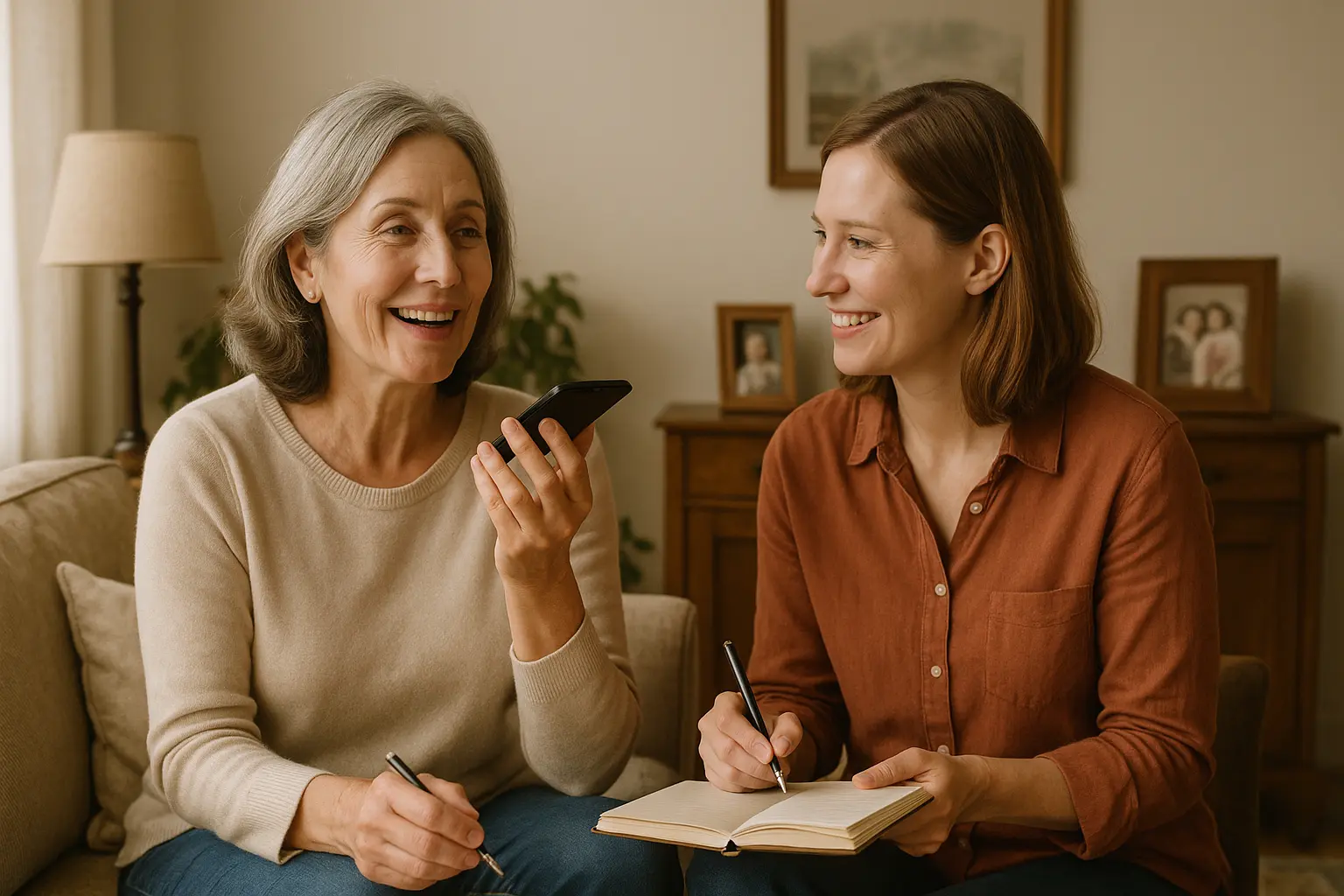
People often freeze when they are asked to “tell their life story.” A conversation feels more natural. Begin with one memory, one object, or one person rather than asking for a complete history all at once.
Try prompts such as:
- What do you remember about the first home you loved?
- Who made you feel welcome when you were young?
- What did an ordinary Sunday look like in your family?
- What is a story you have told many times but never written down?
- What do you wish your grandchildren understood about the way you grew up?
- Which mistake taught you something you still remember?
Give the storyteller time to follow an unexpected thread. A question about a first job may lead to a mentor, a move, a friendship, or a lesson that mattered much more than the job itself. Those turns are not distractions. They are often where the most personal stories live.
Make the recording easy to begin
The best recording setup is the one that does not get in the way of talking. Choose a quiet, comfortable place and keep the first session short. Ten focused minutes can preserve more personality than an hour spent trying to sound polished.
Before you begin, explain that pauses, laughter, corrections, and unfinished thoughts are welcome. The goal is not to deliver a perfect speech. It is to remember out loud.
If you are recording someone else, ask permission before you start and explain how you hope to use the recording. Let them decide whether a story is private, family-only, or suitable to share more widely. Giving the storyteller that choice makes the process feel like collaboration rather than extraction.
Save the original recording before shaping the story
A written memoir and an original recording serve different purposes. The memoir can bring structure and context to a memory. The recording preserves the particular way the person told it.
Keep the original audio as an important part of the story’s source material. Do not worry if it contains a repeated sentence or a moment when the speaker searches for a word. Those details can become precious later because they return you to the real person, not just to a polished summary.
In Life Memoirs, you can answer a memoir question with a voice response. The recording is transcribed, and the original response can be played back while you work with the memory. That gives you both an accessible text version and a way to return to the sound of the conversation.
Review the transcript for meaning and names
Speech-to-text makes a recording easier to work with, but every transcript deserves a thoughtful review. A name, place, family relationship, or important phrase may need correction. A pause may have caused two ideas to run together.
Read the transcript while listening to the original recording. Check:
- Names and spellings
- Places, schools, workplaces, and other proper nouns
- Family relationships
- The order of events
- Words that carry special meaning in your family
- Sentences that sound different on the page than they did aloud
Do not edit away the speaker’s personality in the name of perfect grammar. Correct errors that change the meaning, but keep the expressions, humor, and turns of phrase that make the voice recognizable.
If the response needs a major change, rerecording may be easier than repairing every line. A second attempt can also capture a detail that came to mind after the first conversation. The first recording does not have to be the final answer.
Turn one answer into a focused memoir page
A recording may wander because real memories are connected. A memoir page gives one part of that conversation a clear home.
As you shape the page, look for its center:
- Is this mainly about a person?
- Is it a story about a place?
- Does it explain how a tradition began?
- Is there a turning point or decision at the heart of it?
- What does the storyteller understand now that they did not understand then?
You do not need to include every detail from the recording in one page. A story about a first apartment can become one page, while the story of the friend met there can become another. Keeping pages focused makes the memoir easier to follow and gives each memory room to matter.
Life Memoirs can help turn a spoken or written answer into a polished memoir page with a title and supporting presentation. Treat that page as a draft to review, not as a replacement for the storyteller’s judgment. Add the detail that makes the memory specific, remove anything that does not belong, and keep the meaning at the center.
Preserve the voice without pretending the page is the recording
A written memoir should sound like a thoughtful version of the storyteller, but it will not reproduce every quality of their speaking voice. That is okay. Let each format do its own work.
The recording can preserve:
- The pace and rhythm of the story
- A familiar laugh or expression
- Emotion that is difficult to describe in writing
- The way the storyteller tells a detail differently each time
The written page can preserve:
- A clear sequence of events
- Names and context for future readers
- The connection between separate memories
- A version that is easy to search, read, and organize
When you review the page, ask whether someone who never heard the original conversation would understand why the memory matters. Then listen to the recording and ask whether the page still feels connected to the person who told it. Both answers should be yes, even though the formats are different.
Add the context a future listener will need
A recording that makes perfect sense today may become harder to understand years from now. Add context while the people, places, and relationships are still familiar.
For each story, consider noting:
- The approximate year or life stage
- Where the story took place
- Who was present
- How the people mentioned are related
- What changed afterward
- Why the memory is worth preserving
You do not need to interrupt the conversation with a list of factual questions. You can add context afterward, or use a follow-up question in the next session. A short explanation can help a future family member enter the story without taking away its natural feeling.
Create a gentle listening ritual
Preservation becomes more meaningful when the family returns to it. Choose a simple rhythm that feels sustainable:
Listen after each session
Play the recording soon after the conversation and make a note of names or details to clarify. This is also a good time to ask whether the storyteller wants anything kept private.
Read the page with the recording nearby
Compare the organized page with the original response. If an important feeling disappeared in the edit, bring it back. If the recording includes several stories, decide whether they should become separate pages.
Share one memory at a time
A family member may not sit down to read an entire memoir, but they may enjoy one short story. Let a single memory start a conversation and invite others to add what they remember.
Return to ordinary moments
Do not preserve only achievements and major events. A familiar greeting, a kitchen routine, or the way someone described the weather may become one of the most valuable recordings because it captures everyday life.
Give future generations both the story and the sound
A polished memoir helps a family understand how memories fit together. An original recording helps them feel the presence of the person who remembers them. You do not have to choose one over the other.
Life Memoirs helps you move from a spoken or written answer to an organized life story that you can review, edit, and revisit. When you are ready to preserve a loved one’s memories, explore Life Memoirs and begin with one conversation worth keeping.
The written story may explain what happened. The voice reminds you who was there.