How to Preserve Family Recipes and Traditions in a Life Memoir
- 28 Aug, 2026

How to Preserve Family Recipes and Traditions in a Life Memoir
A recipe is rarely only a recipe. It may carry the sound of a particular kitchen, the person who taught you to make it, the shortcut everyone argued about, or the reason a dish appeared whenever the family gathered. Traditions work the same way. A repeated song, Sunday walk, holiday ritual, or way of welcoming guests can tell future readers what your family valued and how it stayed connected.
These details are easy to underestimate because they feel ordinary while you are living them. They become precious when the people, places, and routines around them begin to change. A life memoir gives you a place to preserve not only what your family did, but what those traditions meant to you.
Begin with one specific tradition
You do not need to document every family recipe or explain an entire heritage in one sitting. Choose one tradition that immediately brings a person or place to mind.
Try starting with:
- The meal your family made when someone came home
- A recipe written in a relative’s handwriting
- The first dish you learned to prepare
- A Sunday or weekend routine
- A phrase, song, prayer, or toast repeated at gatherings
- The way your family celebrated good news
- A custom that changed after a move or major life event
Specific memories are easier to enter than broad summaries. Instead of beginning with “Our family loved cooking,” begin with the first time you were trusted to stir the pot, or the afternoon someone taught you why the ingredients had to be added in a particular order.
Tell the story behind the instructions
A future reader may appreciate the ingredient list, but the story around it is what makes the recipe yours. Ask yourself:
- Who taught me this?
- Where did we usually make or share it?
- What could I see, hear, smell, or feel in that place?
- What did I get wrong at first?
- Was there a family disagreement about how to make it?
- When did this tradition matter most?
- What do I understand about it now that I did not understand then?
A sentence such as “Add two handfuls of herbs” may be perfectly accurate for your family and completely mysterious to someone else. Explain the judgment behind the instruction: how the leaves looked, what “until it feels right” meant, or why nobody measured that ingredient.
The practical detail helps someone imagine the tradition. Your reflection explains why it belongs in your life story.
Capture the people, not only the process
Family traditions are made memorable by the people inside them. Name the person who always arrived early, the child who sneaked a taste, the relative who refused to share a secret ingredient, or the friend who became part of the ritual.
When you describe someone, look beyond their role. Include a gesture, expression, habit, or line of dialogue that makes them present:
My grandfather never sat down until everyone else had food, and he always pretended not to notice when someone took the crispest piece.
You do not need a perfect portrait. One recognizable detail can carry more feeling than a long list of biographical facts.
Record the memory or write it down
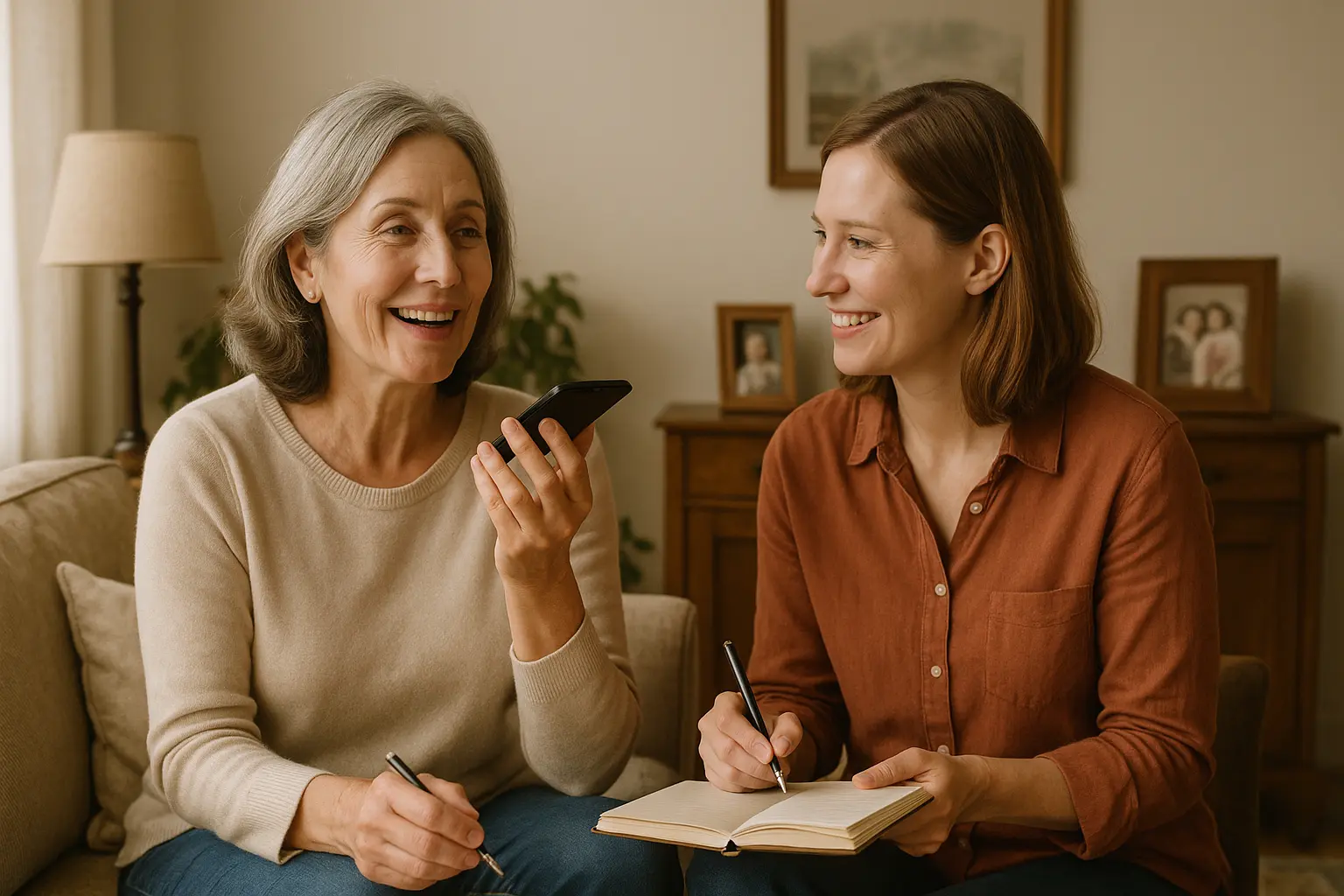
Some memories arrive more naturally when you speak. You can describe the kitchen while you are walking, explain a recipe as if you were teaching it, or tell the story to an imagined grandchild. Other memories are easier to shape in writing, especially when you want to list ingredients, dates, or several versions of a tradition.
Life Memoirs supports both approaches: you can answer a memoir question with a voice response or use the written editor. If you record, the response is transcribed so you can review the words before they become part of your memoir. If you write, you can begin with notes rather than polished paragraphs.
The best method is the one that helps you say something true and specific. You can also use both: speak the emotional story first, then write down the practical details you want your family to keep.
Let one memory lead to the next
A recipe or tradition often opens a door to a larger story. Once you finish one answer, follow the thread instead of forcing yourself to change subjects.
For example:
- The recipe: What did you make, and how?
- The teacher: Who showed you?
- The setting: Where did this usually happen?
- The change: When did the tradition shift or stop?
- The meaning: What does it represent now?
- The continuation: How might someone carry it forward?
Life Memoirs can generate follow-up questions based on an answer, which can help you move from a useful detail to a fuller story. You do not need to anticipate every question before you begin. Start with what you remember, then see what the memory invites you to explore.
Invite another perspective carefully
You may remember the family recipe one way while a sibling, partner, or child remembers it differently. Someone else may know the missing ingredient, remember a different kitchen, or understand why the tradition mattered to another relative.
If you want those perspectives, Life Memoirs lets you invite family members or friends to contribute through a collaboration link. Their responses can give you new details and questions to consider. Review each contribution thoughtfully before developing it further, especially when it includes a private story or a person who may not expect to appear in the memoir.
A contribution does not have to replace your version. It can sit beside it. You might write, “My sister remembers this as a celebration, while I remember being nervous about getting the recipe right.” The difference is part of the family history.
Preserve change as part of the tradition
A tradition does not become less meaningful because it changes. Ingredients may be substituted, a gathering may move to a different home, or a recipe may survive only as a remembered method rather than a written card.
Document the change honestly:
- What stayed the same?
- What did the family adapt?
- Who carried the tradition into a new place?
- What could no longer continue?
- What new version emerged?
This keeps your memoir from treating the past as frozen. Family history includes invention, compromise, loss, and renewal. The way a tradition evolves may tell your descendants as much as its original form.
Give the memory a useful home
A family recipe might belong in a chapter about Family, but it could also connect to Childhood, a place you lived, a person who influenced you, or a value such as hospitality and perseverance. Do not worry if it does not fit neatly into one category. Life Memoirs includes an “Other Topics” path for memories that do not belong to a predefined topic.
You can also place the story where it helps the reader understand the larger memoir. A recipe may work best beside a story about immigration, a first home, a friendship, or the work that supported your family. The tradition is the subject, but the surrounding memories give it context.
A simple prompt for your next family story
Use this prompt to begin:
Tell the story of a family recipe or tradition you want someone to remember. Describe the people, place, and small details around it. Explain how you learned it, what changed over time, and what it means to you now.
If you get stuck, answer only one part. You could describe the first smell, the person’s hands, the table where everyone sat, or the moment you realized the tradition had become yours.
Keep the recipe—and the reason it matters
Preserving a family tradition is not just about saving instructions for what to do. It is about keeping the relationships, choices, sensory details, and meanings that made the tradition part of your life.
Life Memoirs helps you turn spoken or written memories into an organized story you can review, arrange, and share. Start creating your Life Memoirs story when you are ready to preserve the recipes, rituals, and everyday traditions your family should not have to remember alone.
The details may be small. Their place in your family story can be lasting.