How to Write About Your Childhood in a Life Memoir
- 26 Sep, 2026

How to Write About Your Childhood in a Life Memoir
Childhood memories rarely arrive as a neat timeline. You may remember the color of a bedroom, the route to school, a relative’s favorite saying, or the feeling of waiting for someone to come home. Those small details can be the doorway into a much larger story.
You do not need to remember every year or write a complete history of your childhood. Start with the moments that still have texture, emotion, or meaning. This guide will help you find those moments and shape them into a life memoir your family can return to.
Begin with places, not dates
Dates can be difficult to recall, especially when several memories belong to the same period. A familiar place is often easier to use as an anchor.
Think about:
- The home where you spent your early years
- A school classroom, playground, or bus route
- A grandparent’s kitchen
- A neighborhood shop, park, or place of worship
- A holiday destination your family visited often
- A room where important conversations happened
Describe what you noticed there. What did the floor feel like under your feet? Which sounds did you hear in the morning? What could you see from the window? Sensory details help readers picture the world you grew up in, and they may remind you of stories you had forgotten.
Choose one memory at a time
A childhood chapter does not need to cover everything. In fact, one focused memory is often more engaging than a quick list of events.
Instead of writing “My family moved several times,” choose one scene:
- The first night in the new house
- Packing a favorite object into a box
- Meeting a neighbor for the first time
- Saying goodbye to an old bedroom
- Discovering a new route to school
Once you have described that scene, you can add the context around it. What led to the move? How did it change your family? What do you understand about it now that you could not understand then?
Use these childhood memoir prompts
If you are not sure where to begin, answer one prompt in your own words. You can write a few sentences or speak naturally about it.
Home and family life
- What was an ordinary morning like in your childhood home?
- Who made you feel especially understood?
- What rule did your family take seriously?
- Which household task or routine do you still remember?
- What happened when your family gathered around the table?
School and growing independence
- Who was your first memorable teacher, and why?
- What did you look forward to at school?
- When did you first feel proud of something you had done on your own?
- What friendship shaped your early years?
- Which mistake taught you something useful?
Traditions and everyday joys
- What did your family do for birthdays, holidays, or weekends?
- Which meal, snack, or recipe takes you back immediately?
- What games did you play when no one had planned an activity?
- What music, story, or television program was part of your childhood world?
- What small luxury felt special at the time?
Lessons and perspective
- What did the adults around you teach through their actions?
- What did you believe about the world as a child?
- Which belief changed as you grew older?
- What would you tell your younger self today?
- What do you hope your family understands about the person you were becoming?
You do not have to answer every question. Look for the prompt that creates a specific scene or brings a person’s voice back to you.
Let the details carry the emotion
You do not need to label every feeling directly. A detail can show the emotion more naturally.
Rather than writing, “I was nervous on my first day of school,” you might describe holding a parent’s hand tightly, checking the classroom door twice, or noticing that your lunch felt untouched at the end of the day. These details allow the reader to experience the moment with you.
After describing the scene, add the reflection that matters now. Did the nervousness fade? Did the experience change how you approached new places? Did someone’s kindness stay with you? The combination of scene and reflection gives a childhood memory lasting meaning.
Do not worry about perfect recall
Memory is not a recording. You may remember the order of events but not the exact year, or remember how a place felt without recalling every object in it. That is normal.
When a detail is uncertain, use honest language such as “around that time,” “when I was young,” or “as I remember it.” You can also ask a family member whether they remember the same event differently. Their perspective may add context, but your memoir should still represent your own experience.
A meaningful childhood story does not require a perfect archive. It requires care, clarity, and a willingness to share what the memory means to you.
Record or write your first answer
Some memories become easier to tell when you speak instead of trying to compose a polished paragraph. Others feel more comfortable when you can pause and choose each sentence. Use whichever method helps you be most specific and honest.
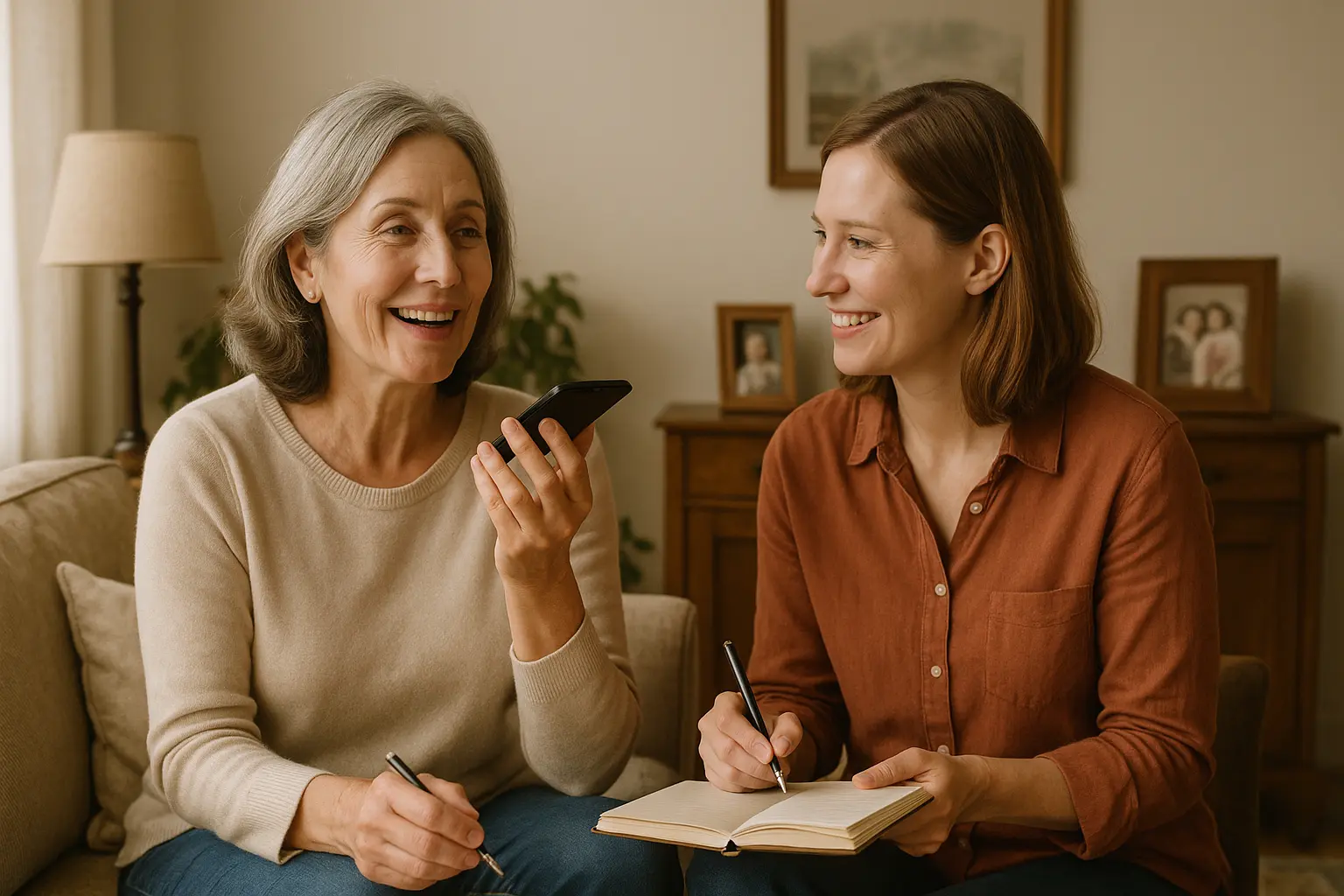
With Life Memoirs, you can answer guided memoir questions by recording a voice response or writing in the editor. A spoken answer can be transcribed, reviewed, and edited before it becomes part of your memoir. If the first attempt feels incomplete, you can revisit the memory and add what comes back later.
You are not trying to produce a finished chapter in one sitting. You are giving one memory enough attention to become a page.
Shape several memories into a childhood chapter
After you have gathered a few memories, look for a natural order. You might organize them by:
- Place: Start with your home, then move through school, the neighborhood, and places your family visited.
- Age: Follow a few turning points from early childhood into adolescence.
- Theme: Group stories about family routines, friendships, independence, or lessons learned.
- A question: Begin with “What made me feel at home?” or “When did I first realize I was growing up?” and let each memory respond.
Life Memoirs includes a Childhood topic alongside other memoir topics, so you can build the larger story one focused answer at a time. You can later review how your pages fit together and arrange your chapters into an order that feels right.
End with what childhood means to you now
A strong childhood section does not need a dramatic conclusion. It can end with a quiet connection between the past and the person you are today.
Consider finishing with:
- A habit you still carry from home
- A family phrase you still hear in your mind
- A value you learned before you had words for it
- A place you would like your family to remember
- Something you now understand about your parents or caregivers
- A quality from your childhood self that you hope never to lose
Your childhood was only the beginning of your story, but it holds the first versions of many things: your sense of belonging, your questions, your hopes, and the people who helped shape you. Give those memories room to be specific, imperfect, and alive.
When you are ready to turn your memories into a lasting story, start creating your Life Memoirs. Begin with one childhood question, one honest answer, and one moment worth passing on.